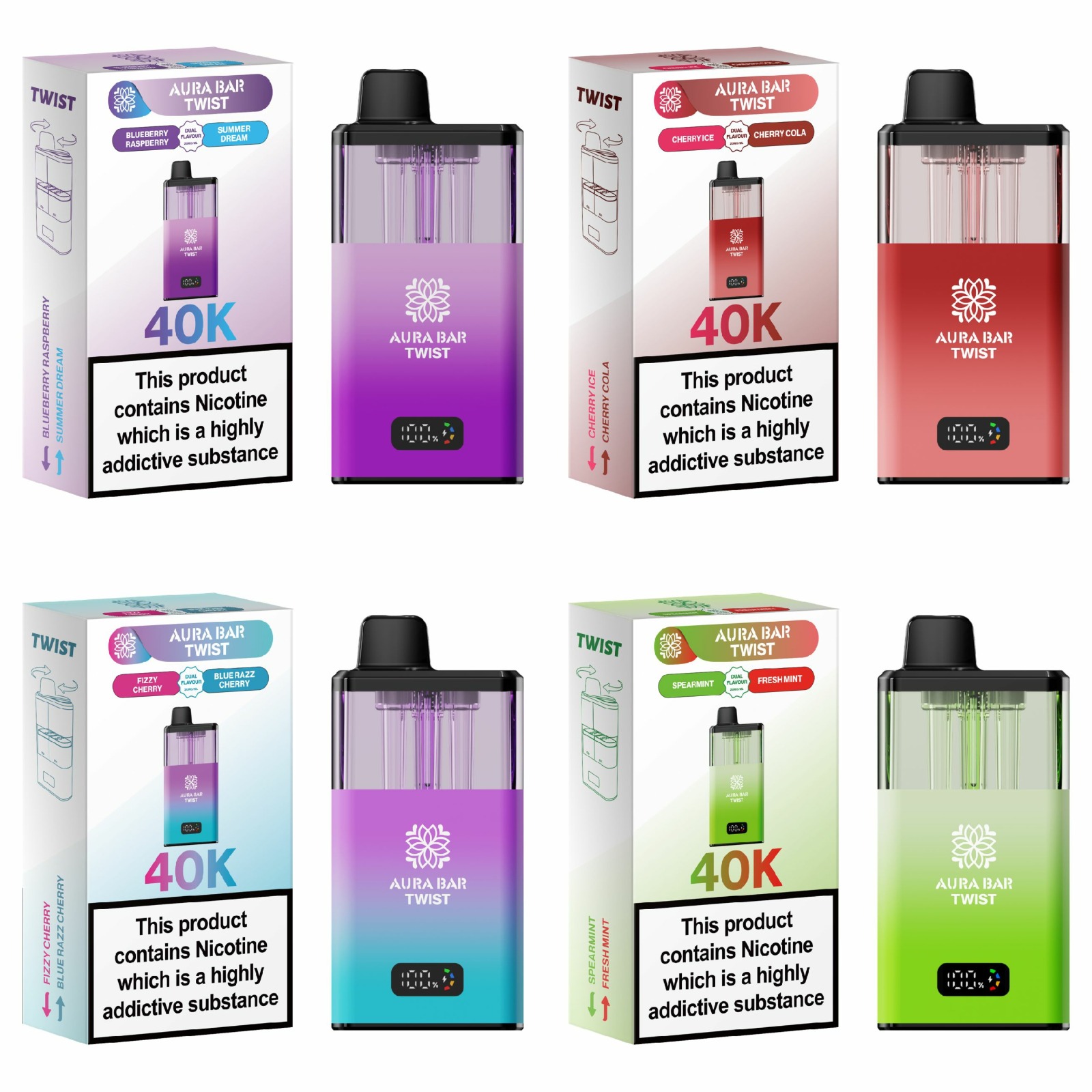
Easy to use straight out the box
Battery lasts me a full day easily. Charging is quick. Overall very pleased with the purchase.
 KangerTech
The KangerTech MT32 Coil (Pack of 5) by KangerTech at 0mg. Free UK delivery over £20, same-day dispatch on weekday orders before 4pm.
The KangerTech MT32 Coil (Pack of 5) is a multipack of replacement coil heads from Kanger, aimed at UK vapers who already own a compatible Kanger tank or device and want to keep it running without buying a whole new kit. The coil head is the small, replaceable part at the base of a tank. It holds the heating element and the cotton wick that feeds e-liquid to it, and it is the component that turns liquid into vapour every time you inhale. Like the brake pads on a car, it is designed to wear out, and replacing it on schedule is the most effective thing you can do to keep flavour and vapour production consistent.
Buying five at once makes practical sense. Most regular vapers change a coil somewhere between every one and three weeks, depending on how often they vape, the wattage they run and how sweet their e-liquid is. A five-pack therefore covers roughly five to fifteen weeks of normal use, and it means you are never left with a tank that tastes burnt on a Sunday evening when the shops are shut. Holding a spare also lets you swap straight away when flavour fades, instead of pushing on with a tired coil, which is the usual reason people end up with a harsh, scorched taste.
Before you order, bear in mind that coil heads are not universal. Each tank is designed around a specific coil format, with its own base, threading or push-fit, and electrical contact. The MT32 is intended for the Kanger products it is listed against, so check the compatibility line on the product page and match it to the model name printed on your tank before you buy. The resistance, measured in ohms, and the recommended wattage range are marked on the coil base and in the product specification. Those two numbers should drive how you set up your device.
What this listing covers:
The rest of this guide walks through what to expect from the coil in use, how to fit and prime it, what to do when something goes wrong and how it stacks up against rival coil systems.
A coil head sets the ceiling for how much vapour your tank can make and how quickly it gets there. Performance comes down to four things working together: the resistance of the coil, the power your device sends to it, how freely e-liquid reaches the wick, and how much air passes through the tank. With the MT32 fitted to a compatible Kanger tank and run inside the wattage range printed on the coil, you should expect a quick warm-up, steady vapour from the first inhale to the last, and no obvious dip in output as the tank empties. Run it well below the range and the vapour will feel thin and cool. Run it above the range and you risk dry hits, a harsh taste and a much shorter life.
On puff count, there is no honest single number, because coil life depends on the person using it. As a rough guide, a coil used by a moderate vaper on a moderately sweet e-liquid at sensible power will often last in the region of a couple of thousand puffs, which for most people works out at a week or two. Heavy chain vaping, very sweet dessert-style liquids and high wattage all shorten that. Light use with clear fruit or menthol liquids can stretch it. Treat flavour as the real indicator, not the calendar.
Several things affect how a coil performs across its life:
Draw style matters too. Lower-resistance coils with open airflow are generally used for direct-to-lung inhales, where you pull vapour straight into the lungs. Higher-resistance coils with tighter airflow suit mouth-to-lung inhales, similar to drawing on a cigarette. Check the resistance on your coil, then pick the airflow setting that matches the way you naturally inhale. If the draw feels too airy and flavourless, close the airflow a little. If it feels restricted and hot, open it up.
Over the life of a coil, expect the first couple of days to be the strongest in flavour, then a long, stable middle, then a gradual fade. When you notice flavour dulling even though the tank is freshly filled and the battery is charged, that is the cue to fit the next coil from your pack.
A coil does not have a flavour of its own, but it shapes how your e-liquid tastes more than most people expect. The temperature of the heating element, the surface area in contact with the wick and the way vapour is carried to your mouth all change how a liquid comes across. When a coil is fresh and properly primed, you should taste the e-liquid cleanly, with no metallic edge and no hint of cotton beyond the first few puffs. That neutral character is what you want from a replacement coil, because it lets the flavour of the liquid carry the experience.
Expect a short break-in period. For the first tank on a new coil, flavour often takes a few minutes to settle as the cotton finishes soaking and any manufacturing residue burns off. Many vapers keep the power at the low end of the range for the first few pulls, then step up to their normal setting. If you notice a papery or cardboard taste at the start, it usually means the wick is not fully saturated rather than that the coil is faulty. Let the tank sit for a few more minutes, take a couple of gentle draws without pressing the button, and try again.
How different liquid types behave on a coil like this:
One practical issue is ghosting, where traces of a previous flavour linger in the wick. If you switch from a strong menthol to a creamy dessert on the same coil, you will probably taste both. The answer is not to flush the tank and hope. It is better to dedicate coils to flavour families. With five in the pack, you can reserve one for menthol and ice, another for fruit, and another for sweeter profiles, and rotate them as you change liquids. Keep a note on the tank or a small label on the spare coil box so you know which is which.
If flavour seems flat from the start, check the basics before blaming the coil: an unprimed wick, a nearly empty tank, a low battery or airflow set too wide are all more common causes than a defective part.
A coil head looks simple, but there is a fair amount of engineering in a part you can hold between two fingers. A typical replaceable coil of this kind has a metal shell that locates the coil in the tank and carries the electrical connection, a heating element made from resistance wire or a mesh sheet, an organic cotton wick packed against that element, wicking holes or slots that let e-liquid in, and a base with an insulated contact pin and a sealing ring. The quality of each of these parts, and the consistency from one coil to the next, is what separates a pack where all five behave identically from one where they vary.
When your pack arrives, it is worth a thirty-second inspection before you fit anything. Look for the following:
Kanger is an established Shenzhen-based manufacturer that has been producing vaping hardware for well over a decade, and its replacement coils are built to a consistent format for the tanks they belong to. That said, a coil is a consumable, and build quality is judged over days of use rather than at first sight. A well-made coil should push or screw into the tank smoothly without force, seat firmly, and fire on the first press once primed. If it needs force to fit, stop and check you have the right coil for your tank rather than risk damaging the base or the tank's threads.
Counterfeit coils are worth a mention. Coil heads are among the most frequently copied vaping products, and fakes can look convincing. They may fit and fire, but they can use unknown wire and wick materials, vary in resistance and fail early. Buying from a reputable UK retailer cuts that risk. Treat a price that looks far too low, packaging with spelling mistakes or mismatched printing, and coils with unmarked bases as warning signs.
Storage matters for longevity as well. Keep unused coils in their sealed packaging, somewhere cool, dry and out of direct sunlight, and away from children and pets. Do not leave them loose in a bag or pocket where the cotton can pick up lint, or where the contact pin can be bent. A coil that has been handled roughly before it ever reaches the tank is a coil that is more likely to cause problems on day one.
The coil does not contain a battery, so there is nothing to charge on the MT32 itself. Its relationship with your battery still matters, because the coil determines how hard your device has to work. The resistance of the coil, measured in ohms, together with the power you set, decides how much current flows from the cell. As a simple example, a coil with 0.5 ohm resistance run at 30 watts draws about 7.7 amps at the coil, since current equals the square root of power divided by resistance. A 1.0 ohm coil at the same wattage draws about 5.5 amps. Lower-resistance coils are more demanding on the battery, which is why they need devices and cells rated for the load.
For battery life, a rough illustration helps. A built-in 3,000 mAh cell holds around 11 watt-hours, since 3 amp-hours at about 3.7 volts is roughly 11 Wh. At 30 watts that is about 22 minutes of pure firing time in theory. With real-world losses and puffs of two to four seconds, you might expect a few hundred puffs per charge. A smaller 1,000 mAh battery gives about a third of that. These figures are general illustrations, not claims about a specific device, because actual runtime depends on your hardware, your wattage and your puff length.
Good habits when charging and using the device that the coil sits in:
Disposal is the part many people overlook. Lithium batteries and spent vapes should never go in household bins or normal recycling, because crushed cells can cause fires in collection vehicles and waste sites. Take them to a vape-recycling or battery drop-off point instead. Many UK vape shops, supermarkets with small electricals and battery bins, and council household waste recycling centres accept them. Spent coils are small pieces of metal and cotton, and the simplest approach is to take them along with your other vape waste to the same drop-off points rather than putting them in general rubbish.
Single-use disposable vapes can no longer be sold in the UK, so a refillable system with replaceable coils like this is the route most vapers now take. It also produces far less waste per week of use than throwing a device away every few days.
Replacement coil heads fall broadly into two families. In a round-wire coil, resistance wire is wound into a spiral around or beside a cotton wick. In a mesh coil, a thin sheet of perforated metal is formed into a cylinder or strip, with the cotton pressed against it. Both do the same job, but they behave differently. The product listing and the markings on the coil base give the build and resistance of this particular coil, and the notes below explain what those details mean in practice so you can set up your device sensibly.
Round-wire coils concentrate heat in a small area, which tends to produce a warm vapour and a flavour that is focused and punchy. They warm up quickly, but they can develop hot spots, and the flavour can fade a little sooner as residue builds in the wire. Mesh coils spread the heat across a much larger surface area. The result is usually a smoother, more even vapour with a wider flavour range, and many users find that mesh handles sweet liquids better. Mesh tends to need a touch more power to warm fully, and it can feel cooler on the draw.
The terms you will see printed on or listed with a coil include:
Wicking deserves attention because it is where most coil problems begin. Liquid enters through small ports on the side of the coil, soaks into the cotton and is then vaporised by the heating element. If the wick takes in liquid faster than the coil heats, you get gurgling and leaks. If the coil heats faster than the wick feeds, you get dry hits. The balance depends on the thickness of your e-liquid, the size of the ports and the power you choose. This is why high-VG liquids pair better with larger ports and higher power, while thinner 50/50 liquids suit smaller ports and lower power.
Whichever build you have, the principle is the same. Pick the airflow and power that suit the coil's resistance, prime it patiently, and let the wick do its work. That approach gets the most out of every coil in the pack.
The coil itself contains no nicotine, but the strength of the liquid you pair with it has a big effect on how your vaping feels. In the UK, nicotine e-liquid is legally capped at 20 mg/ml and sold in bottles of no more than 10 ml. The same 20 mg/ml cap applies to the liquid used in disposables and pods, and it is the highest strength you can legally buy. Many vapers do not need anything close to that, and the right choice depends largely on the resistance of the coil and the way you inhale.
As a general guide, match nicotine type and strength to your coil like this:
Freebase nicotine gives a sharper throat hit and is better at low and medium strengths. Nicotine salts feel smoother and absorb faster, so they are popular for ex-smokers who want satisfaction from small puffs. Salts are generally too strong for very low-resistance, high-power coils, because the amount of vapour per puff would deliver far more nicotine than most people want.
Thickness is the other half of the decision. Higher-VG liquids such as 70/30 and above are thicker and produce larger clouds, and they need a coil with enough wicking capacity to keep up. A 50/50 blend is thinner, wicks easily, and usually gives better flavour at lower power. If your coil gurgles or goes dry on a thick liquid, a 60/40 or 50/50 blend is a sensible compromise.
If you are new to vaping, start at a lower strength than you think you need and increase only if cravings are not satisfied. Using more nicotine than necessary leads to coughing, a harsh throat hit and quicker dependence. If you have never smoked, you do not need to start. Nicotine is addictive, and vaping is intended for adult smokers who want a less harmful alternative to cigarettes. Zero-nicotine liquid is available if you only want the flavour.
This pack is aimed squarely at people who already use a compatible Kanger tank or device. If you are one of them, the MT32 multipack is a straightforward way to stock up and avoid last-minute substitutions. If you are not sure whether your tank takes this coil, check the model name on the tank base or box and compare it to the compatibility listed on the product page. A coil that nearly fits is not a coil that fits, and forcing the wrong one can damage both the coil and the tank.
The pack makes the most sense for:
It is not the right purchase for everyone. You should think twice if:
If you are still deciding between this and another option, ask yourself which tank you will actually be using in three months. Coils are only worth stocking for the hardware you will keep.
Changing a coil takes a couple of minutes and needs no tools. The one step that matters more than any other is priming, because a coil fired dry can burn the wick in seconds and spoil the taste for the rest of its life. Work through the steps in order and the result will be reliable.
Keep in mind the 2 ml maximum capacity that applies to tanks sold in the UK. If you are filling a smaller tank, take it slowly and avoid overfilling, because liquid forced into the airflow path will flood the coil and leak. If you are using a bottle with a narrow nozzle, hold it at an angle to the fill port so air can escape as the liquid goes in.
With a little practice the whole routine becomes quick, and a properly primed coil typically gives a clean first draw and reaches full flavour within the first few minutes.
Most coil problems come down to a handful of causes, and many of them can be fixed without throwing the coil away. Work through the symptom that matches yours before assuming the coil is faulty.
If a coil fails straight out of the pack, with no fit problem and no user error, keep the packaging and contact the retailer. Faulty goods are covered under the Consumer Rights Act 2015, and a retailer will want to know the batch details. If you swap in another coil from the same pack and the problem disappears, you have identified a single bad coil rather than a problem with your tank.
Finally, a tip for diagnosing coil life: if you notice the same decline in flavour across two coils in a row with different liquids, look at your power setting and puff rhythm before blaming the batch. Running high with long, back-to-back draws is the quickest way to shorten the life of any coil.
Judging a coil pack on value means looking at cost per week of use rather than the price on the shelf. The calculation is simple. Take the price of the pack, divide it by five to get the cost per coil, then divide that by the number of weeks you expect each coil to last. For a vaper who changes a coil every two weeks, five coils last ten weeks, and across a year that is roughly 26 coils, or a little over five packs. The cost per week lands at a modest figure, particularly when compared with buying disposable-style devices every few days, which is no longer an option in the UK anyway.
A multipack also saves money in less obvious ways. It avoids the expense of single-coil postage or a rushed purchase from a shop with limited stock. It means you can swap a tired coil immediately, which prevents the damage that a burnt wick does to the taste of fresh liquid. And it lets you dedicate coils to flavours, which keeps each liquid tasting as intended rather than muddled.
You can stretch each coil further with a few habits:
It is also worth being realistic about what you are paying for. A coil is a consumable that is built to a price, and the cost is part of the running expense of refillable vaping, along with e-liquid and eventual battery replacement. A sensible way to judge value is to compare the total cost per week of your whole setup against what you used to spend on cigarettes. For most UK smokers who switch, that comparison is clearly in the vaper's favour.
Finally, avoid false economy. Very cheap, unbranded coils that claim to fit your tank may save a pound or two but can lead to inconsistent resistance, early failure and flavour problems. A genuine pack bought from a UK retailer with a clear returns policy is usually the better value when you count the cost of wasted e-liquid and the frustration of a coil that fails after two days.
Coil systems are closed ecosystems. A Kanger coil fits Kanger tanks, a Vaporesso coil fits Vaporesso devices, and so on, so most readers are not choosing between coils so much as between platforms. Still, it is useful to see how this pack sits against what other brands offer, and to be fair about where each approach has strengths.
Where does the Kanger MT32 pack fit? Its main advantage is simplicity for people who already use the matching Kanger hardware. You buy a pack of five, you keep your current setup running, and you do not have to relearn anything. If you want to change to a platform with more coil variety, you will be buying new hardware as well as new coils, so the comparison is really between continuing with what you have and switching platforms.
Where it is weaker is range. A platform that offers many resistances and builds in a single format gives you more room to experiment with draw, power and flavour. Before committing to a Kanger tank, check how many coil options are available for it and how easy they are to find in the UK. If you already have a compatible Kanger tank, though, the MT32 pack is the straightforward way to keep it going, and it avoids the cost of replacing hardware that still works.
Whatever you choose, buy coils from a retailer with a clear UK returns policy, and avoid third-party imitations that cannot show their materials or origin.
| Brand | KangerTech |
|---|---|
| Product type | Vape Accessory |
| Nicotine strength | 0mg |
| Price | £3.75 |
| Availability | In stock — same-day dispatch |
| Compliance | UK TPD-compliant, MHRA-registered |
KangerTech is one of the original tank-builder brands — the Subtank and EVOD series shaped modern sub-ohm vaping.
It depends on the coil's resistance and your inhale style. For lower-resistance coils that make a lot of vapour, freebase at 3 mg/ml to 6 mg/ml is common, while higher-resistance coils with small, warm puffs often pair with nicotine salts at 10 mg/ml to 20 mg/ml. The UK legal limit is 20 mg/ml, and most people do not need to be near it, so start low and only go up if cravings are not satisfied.
No. The coil is a passive heating part with no battery of its own. Charging applies to the device it sits in, which you should charge with the supplied USB-C cable or a proper external charger for removable cells, and never leave charging unattended.
You can, but the wick holds on to traces of the previous liquid, so flavours may blend if you switch often. Strong menthol and creamy dessert liquids are the most likely to clash. With five coils in the pack, it is worth dedicating one coil per flavour family to keep each liquid tasting as intended.
Most regular vapers get somewhere between one and three weeks, which for moderate use is often a couple of thousand puffs. Sweet dessert liquids, high wattage and chain vaping shorten that, while light use with clear fruit or menthol liquids can stretch it. Replace the coil when flavour fades or you get a burnt taste, not just on a fixed date.
A multipack usually brings the cost per coil down compared with buying singles, and it stops you running out. For someone changing a coil every two weeks, five coils cover about ten weeks of use. Divide the pack price by five and then by the number of weeks per coil to see your cost per week.
It suits adult smokers and existing vapers who already own a compatible Kanger tank and want spares. It is not for under-18s, for non-smokers who do not already vape, or for anyone whose tank is a different brand or model, because coils are only interchangeable within the platform they were designed for.
Match the model name on your tank or its box to the compatibility line on the product page, and check that the coil's base and resistance markings match what your tank is designed for. If you are unsure, contact the shop before ordering, because forcing a coil that does not fit can damage the tank.
We deliver to UK addresses, with delivery options and costs shown at checkout. Vaping products are for adults only, so you must be 18 or over, and age checks apply when you order and at the point of delivery.
Keep the packaging and contact us with your order details and a description of the fault. Faulty goods are covered under the Consumer Rights Act 2015, and our returns page sets out how unopened and opened items are handled. For hygiene reasons, opened coils may not be returnable unless they are faulty.
Do not put used coils, batteries or vapes in the household bin or standard recycling. Take them to a vape-recycling drop-off point, which many UK vape shops, supermarkets and council household waste recycling centres provide. Lithium batteries in particular can cause fires if crushed in collection vehicles.
Royal Mail Tracked 24 (Next-Day): £1.99, FREE on orders over £20.
DPD Next Working Day: £3.99 (£2.99 over £20), FREE over £100.
Same-day dispatch on orders placed before 4pm Mon-Fri. See our delivery page for full details.
Battery lasts me a full day easily. Charging is quick. Overall very pleased with the purchase.
This is now my daily. Flavour is spot on and it lasts well. Proper good product.
Does what it should. Smooth hit, no burnt taste even after a couple of weeks. Would recommend.
Been meaning to leave a review for a while. This has become my daily go-to. Highly recommend.
Did a comparison with another brand and this came out on top. Better flavour and better value.
Arrived well-packaged with next-day delivery. Taste is clean and authentic. Nothing to complain about.
 KangerTech
 A
 Aspire
 Aspire
 Aspire
 Aspire
 Aspire
 Aspire







The products on this site contain nicotine and are only for adults aged 18 or over. Please confirm your age to enter.
By entering you agree to our Terms & Privacy Policy.